
Western Greece votes on its needs: BIO-DISTRICT APP workshop in Patras
23 November 2026InnoPolis brings local stakeholders to the heart of the BIO-DISTRICT APP

Patras, 25 November 2026.
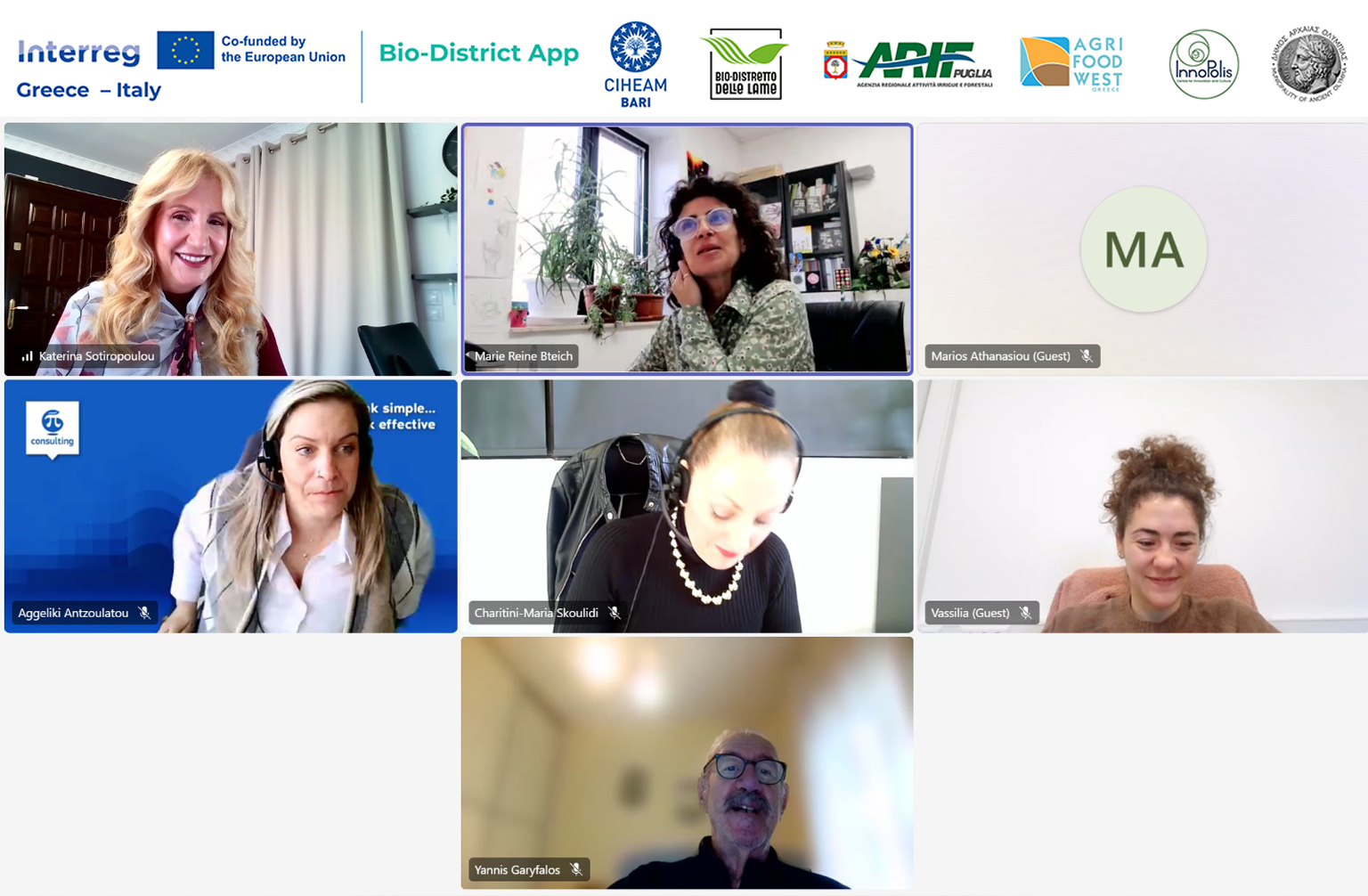
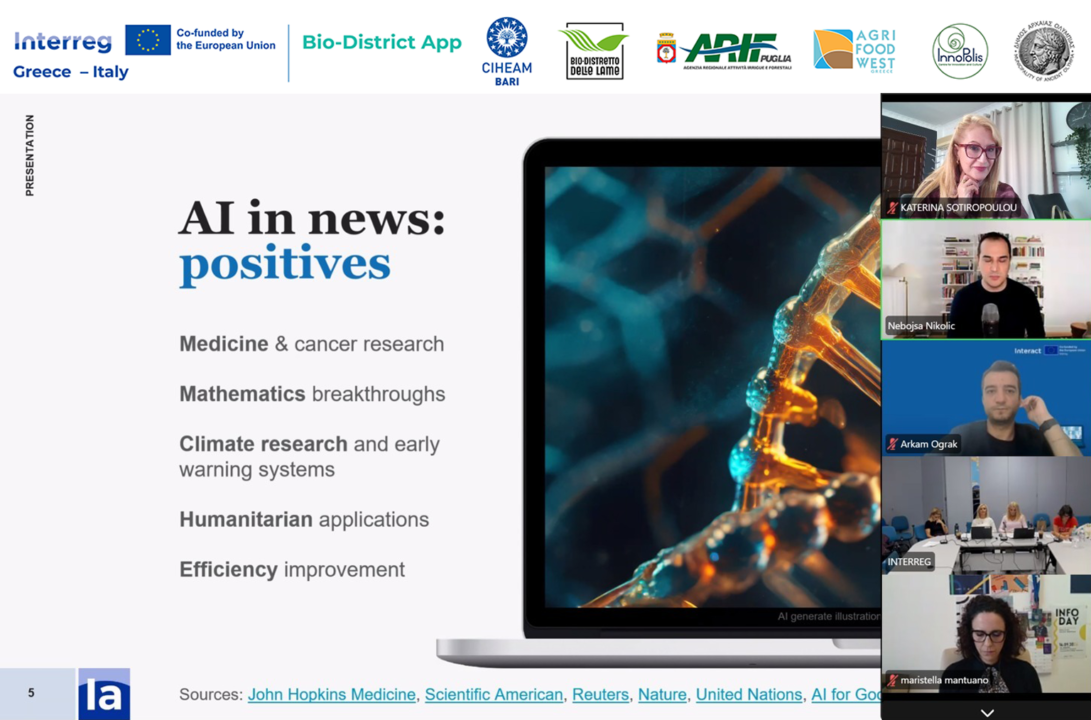
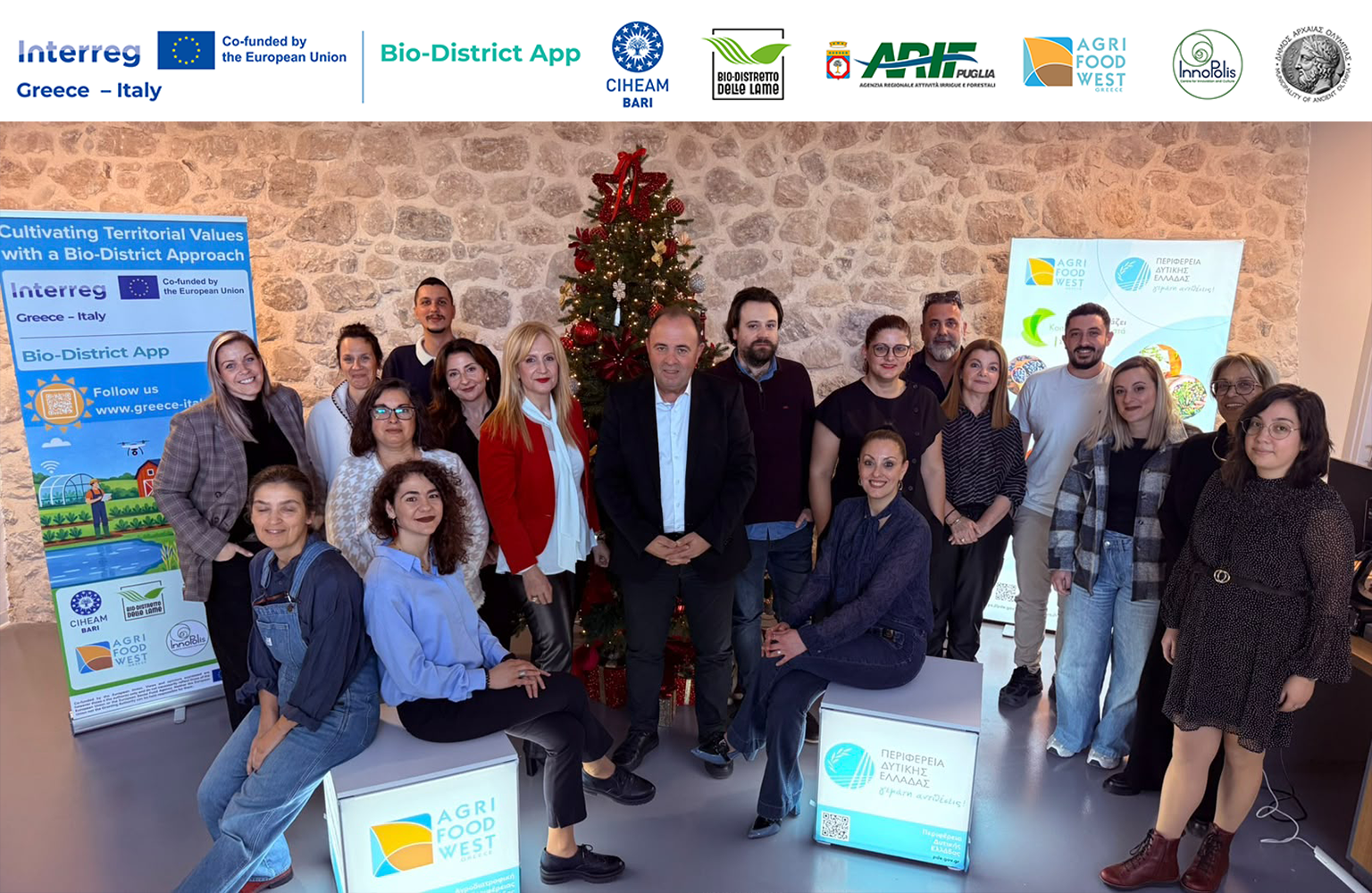
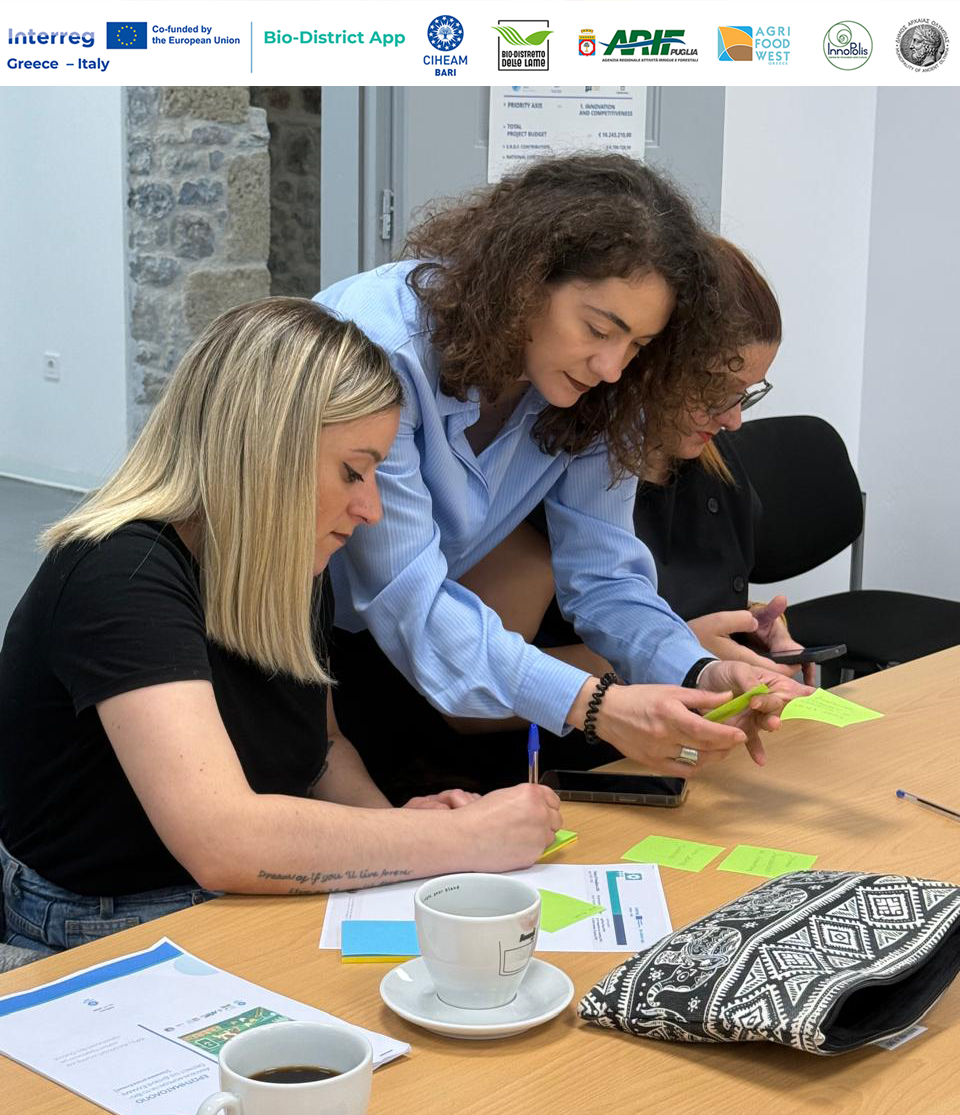
More than 18 stakeholders from agri-food, organic farming, culture and tourism took part, in the room and online, in two workshops of the project BIO-DISTRICT APP – “Cultivating Territorial Values with a Bio-District Approach”. InnoPolis gathered and prepared stakeholders from its local network and supported the event throughout. The workshops were organised by AGRIFOODWEST, assisted by external experts in their execution.
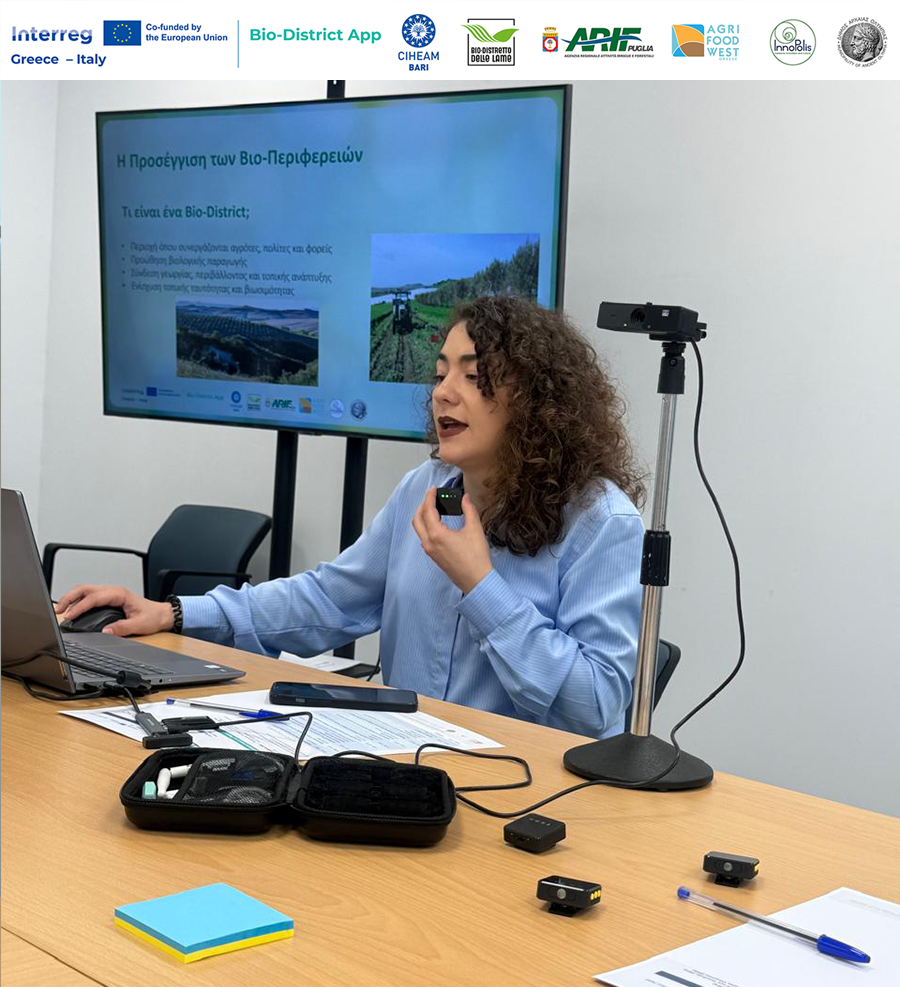
A bio-district is an area where producers, businesses, cultural and tourism operators, public authorities and citizens agree to work together and promote their territory as a whole, on the basis of organic and sustainable production. BIO-DISTRICT APP supports this approach in Western Greece and in Puglia with simple digital services, designed together with the people who will use them.
A bio-district lives from the people who take part in it. Bringing those people to the table, and keeping them involved, is where InnoPolis has put its effort.
In the weeks before the workshop, InnoPolis approached stakeholders from its own network in Achaia, among them an organic nursery business, a local history institute and a travel agency in Patras. It met them in advance, explained the bio-district approach and the purpose of the project in plain language, and showed each of them what the project can mean for their own daily work.
InnoPolis then supported each stakeholder in completing the needs questionnaire, so that they arrived in Patras with their own needs already thought through and ready to be discussed. On the day, InnoPolis took part in the discussion together with its stakeholders, encouraged them to put their experience forward, and supported the running of the event from start to finish.
For InnoPolis this is continuous work. The same stakeholders will be invited to the next steps of the project, starting with the workshop that InnoPolis organises in December.
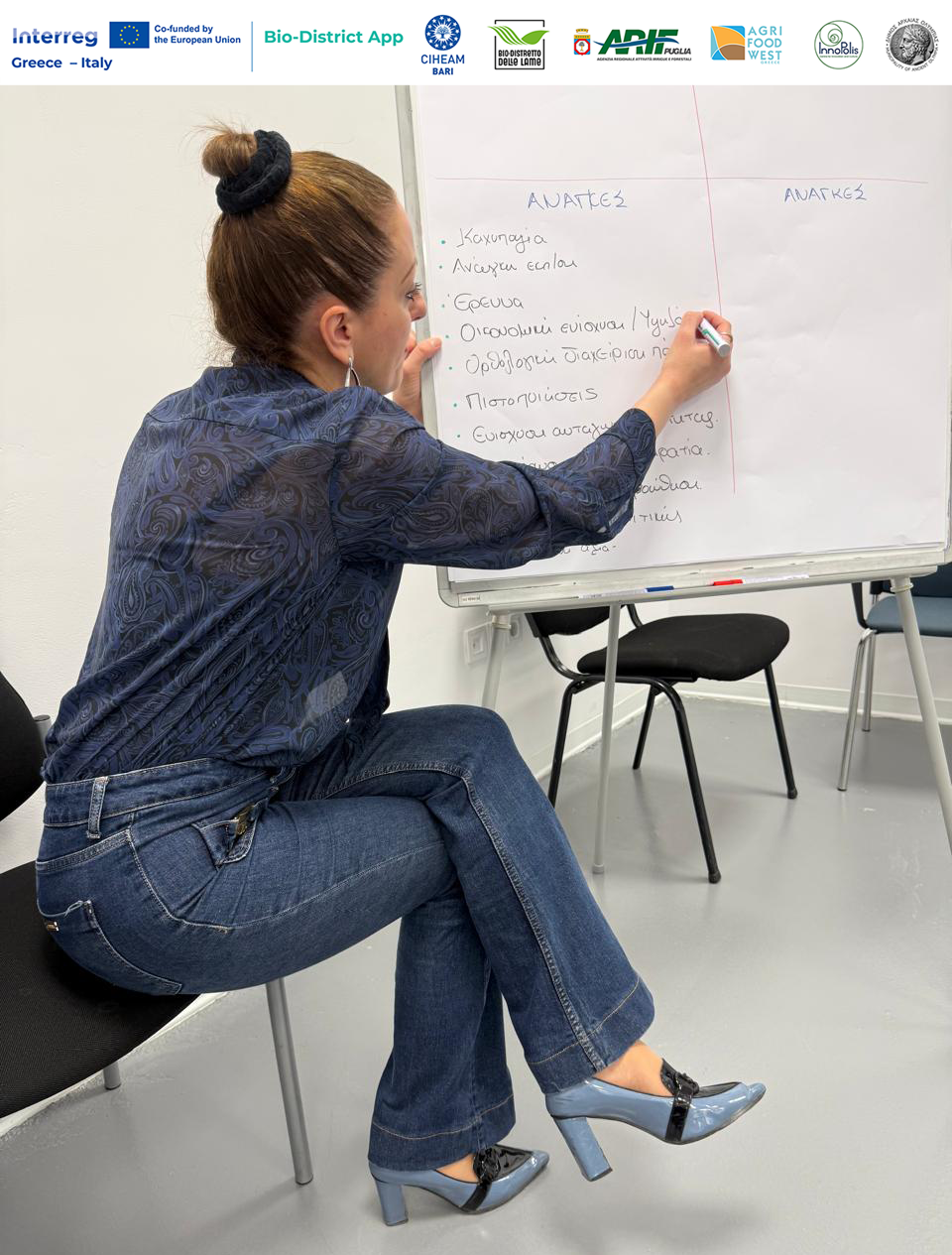
The first workshop was dedicated to the needs assessment. Instead of receiving ready-made solutions, the stakeholders were asked what they actually need. The session followed the Nominal Group Technique, the same method used by the Italian partners, so that the results of the two countries can be compared. Its strength is that every voice counts equally: each participant first writes down their own needs, all needs are then shared and clarified in the group, and finally they are prioritised by individual vote.
The flipchart filled up quickly. From the agri-food and organic farming side, the participants pointed to:
From the culture and tourism side, the needs were just as concrete:
One message came through in both groups: the sectors of Western Greece have a lot to offer each other, but today the information is scattered and cooperation is limited. A shared digital space is seen as a practical way to change this.
The second workshop was dedicated to the exchange of best practices. Nine digital services and tools that already work in Western Greece were presented, so that the bio-district builds on what exists and does not start from zero.
Three lessons came out of this picture:
No example was found specifically for organic farming, and no shared tool was found for a common calendar of events or a catalogue of bookable experiences. The task for the bio-district is therefore to connect what already exists.
The priorities identified in Patras will feed into the project’s needs assessment for Western Greece and will guide the next steps, where the digital services will be co-designed and tested together with the stakeholders.
InnoPolis continues this work with another workshop on the exchange of best practices, which it organises in the second week of December 2026 and to which the participating stakeholders are invited. Details will be announced soon on this website and on our social media.
InnoPolis warmly thanks all the stakeholders who gave their time, experience and ideas.
The BIO-DISTRICT APP project is co-funded by the European Union under the Interreg VI-A Greece–Italy 2021–2027 programme. The views and opinions expressed are those of InnoPolis and do not necessarily reflect those of the European Union or the Managing Authority.