

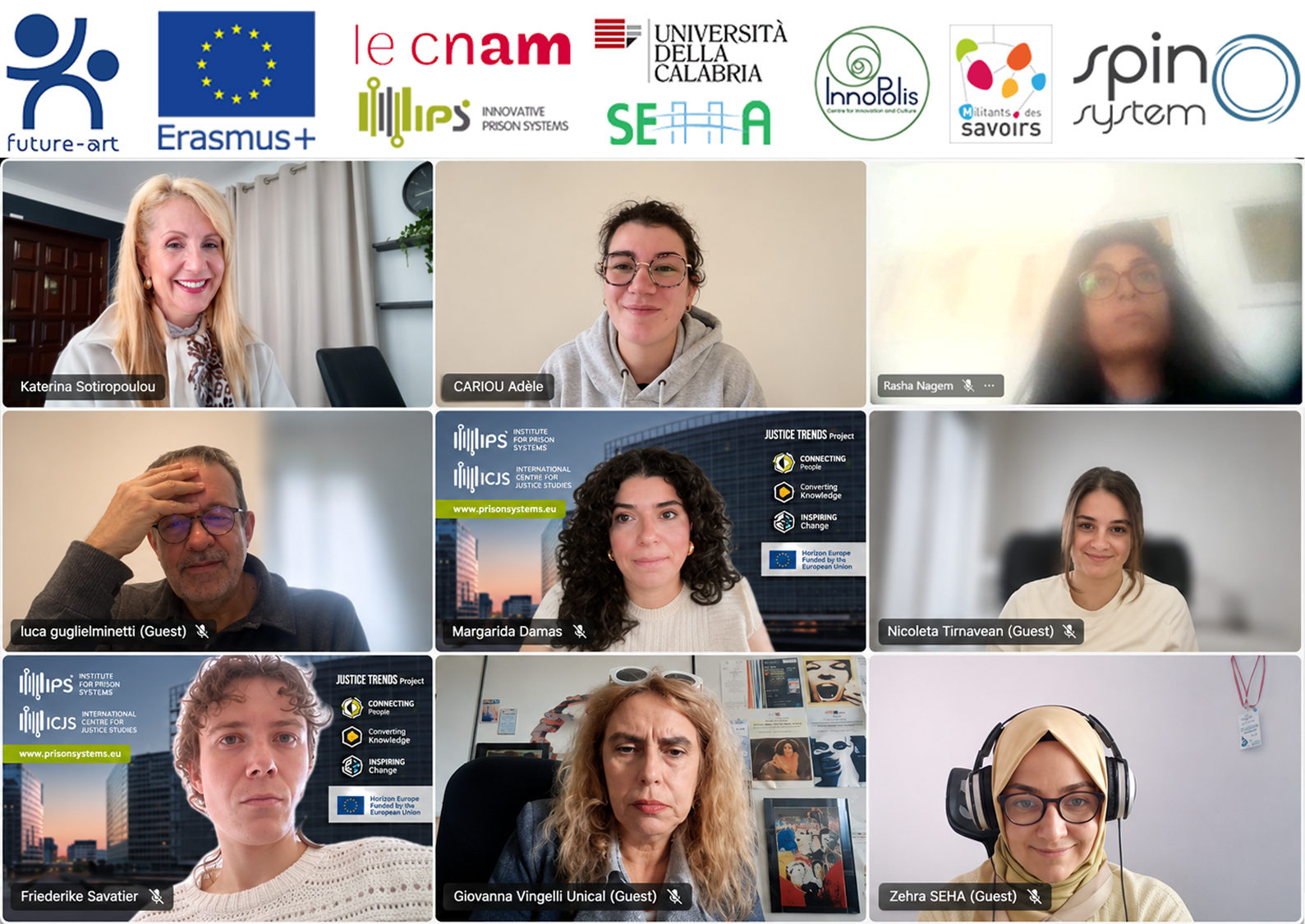
FUTURE-ART partners meet online to prepare the next phase of the project
4 November 2026“Is This Legal?” — How Liberté Helps Young People Recognise Labour Exploitation


Lina is 19. She is offered a job in a hotel abroad, but when she arrives, the hotel job does not exist. Instead, she cleans houses fifteen hours a day, and the agent who arranged the trip keeps her ID card “just for the paperwork.”
Stories like Lina’s are fictional, but the pattern behind them is real. In Greece, labour exploitation has become the most common form of human trafficking, and taking control of a person’s documents is one of its clearest warning signs.
This is exactly the kind of situation the Liberté app was designed for. Developed within the European project FUTURE-ART – Sentinels of the Future: Together to Eradicate Human Trafficking, Liberté gives young people clear legal information at the moment they need it.
In a few taps, Lina chooses her country, opens “Is this legal?” and selects what is happening to her: “Someone keeps my ID.” The answer is immediate and clear: this is against the law, and her ID belongs to her. If she needs help, the national helplines of her country are just one tap away.
Liberté is free of charge, works offline and does not store anything the user reads. Young people can download it before they travel, so it is always with them, even without an internet connection.
The app will soon be available in six languages: English, Greek, French, Italian, Portuguese and Turkish.
Liberté is developed by InnoPolis (Greece) with associate partner Technical Engineers for Technology (TET, Jordan), together with Cnam (France), University of Calabria (Italy), IPS (Portugal), SEHA (Turkey) and Spin-System (Belgium).
More information and the official launch will be announced soon.
Co-funded by the European Union. Views and opinions expressed are however those of the author(s) only and do not necessarily reflect those of the European Union or the European Education and Culture Executive Agency (EACEA). Neither the European Union nor EACEA can be held responsible for them.