
Bio-Districts, Living Labs and Digital Innovation: The Greece–Italy Project Building Tomorrow’s Sustainable Territories
18 May 2026
FUTURE-ART is moving forward
3 June 2026InnoPolis Takes the Stage at the RGC Conference: Presenting the BIO-DISTRICT APP

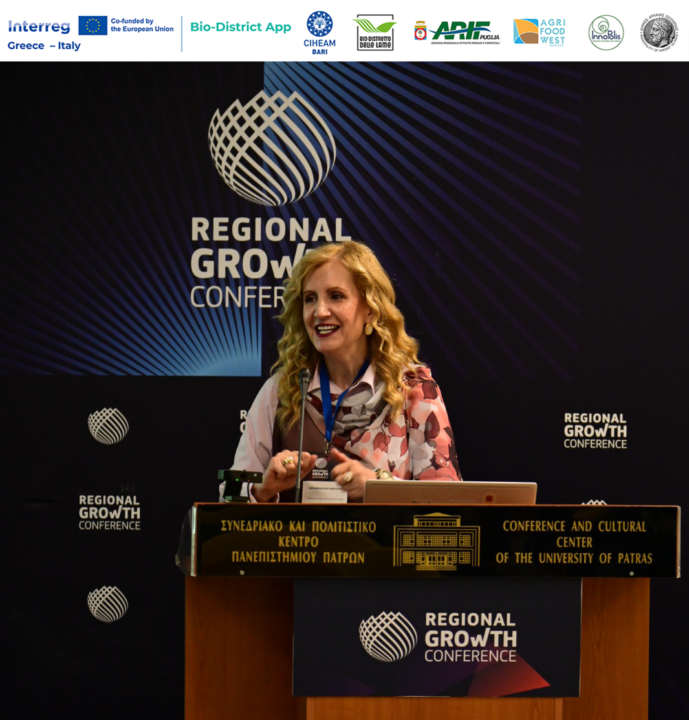
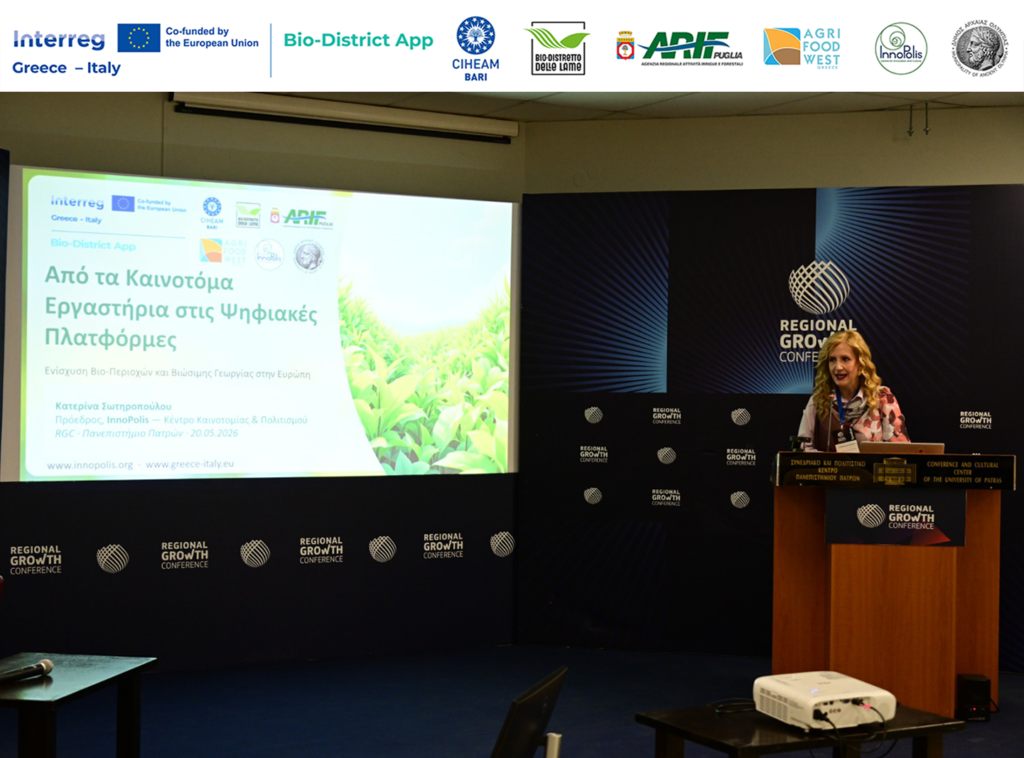
On 20 May 2026, InnoPolis proudly represented its work at the Regional Development Conference (RGC) at the University of Patras, presenting the BIO-DISTRICT APP — a groundbreaking Interreg project bridging organic farming, digital innovation, and cross-border collaboration between Greece and Italy.
Katerina Sotiropoulou, President of InnoPolis — Centre for Innovation & Culture, delivered a comprehensive presentation to an audience of researchers, policymakers, practitioners, and stakeholders from across the region. The session offered a deep dive into both the vision and the concrete outcomes of the BIO-DISTRICT APP project, highlighting InnoPolis’s central role in its development and dissemination.
Europe’s Agricultural Challenge — and Our Answer
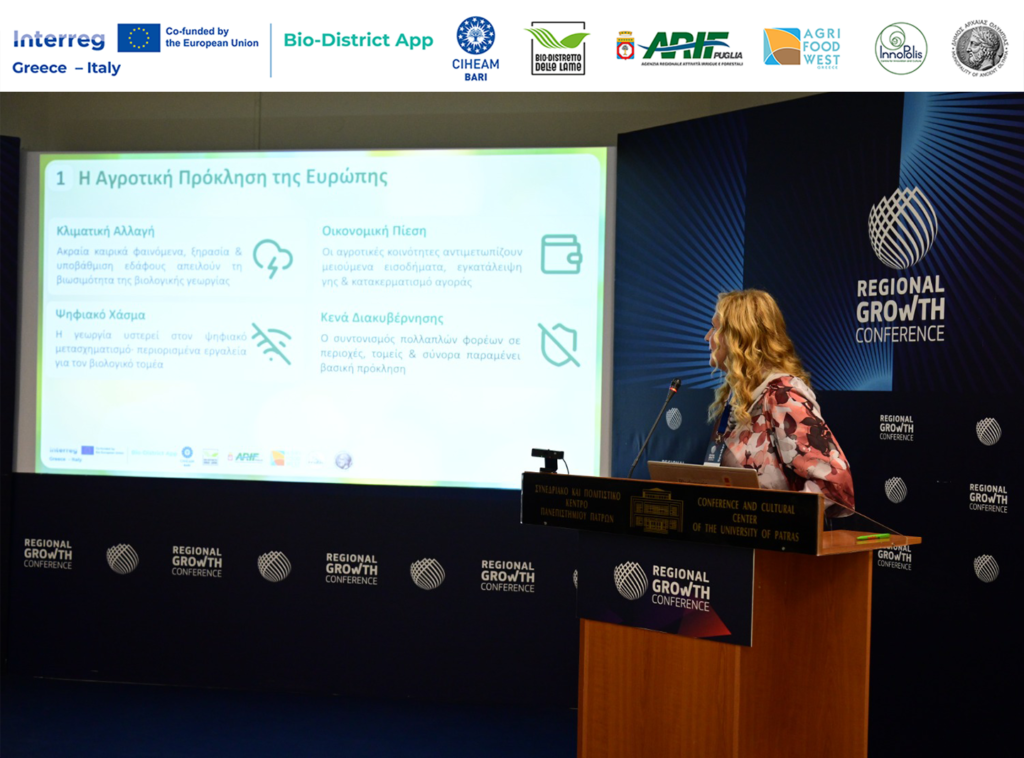
The presentation opened by framing the urgent context: European agriculture faces a convergence of pressures that demand innovative, collaborative responses.
 Climate Change
Extreme weather, drought, and soil degradation threaten the viability of organic farming across the continent.
 Economic Pressure
Rural communities face declining incomes, land abandonment, and fragmented markets with little digital support.
 Governance Gaps
Multi-stakeholder coordination across regions, sectors, and borders remains a persistent challenge.
 Digital Divide
Agriculture lags behind in digital transformation, with limited tools designed specifically for the organic sector.
The BIO-DISTRICT APP project was conceived precisely to address these challenges — combining the bio-district governance model with Living Lab methodology and a state-of-the-art digital platform.
The presentation concluded with an inspiring vision for the future — one that extends well beyond the project’s lifetime. The platform is designed to be open, scalable, and replicable, with a roadmap that includes:
 A Mediterranean bio-district network · Open-source platform publication · Integration with national agri-digital systems · Replication across new Interreg regions · Policy engagement at European level.
From Living Labs to a Mediterranean network of bio-districts — this project is a blueprint for how innovation, technology, and community can come together to build a more sustainable and resilient Europe.
The RGC Conference provided an ideal platform to share these outcomes with a wide audience, reaffirming InnoPolis’s commitment to making the results of publicly funded projects visible, accessible, and impactful — in line with the project’s “public” deliverable status under the grant agreement.
The BIO-DISTRICT APP project is co-funded by the European Union under the Interreg VI-A Greece–Italy 2021–2027 programme. Views and opinions expressed are those of the author and do not necessarily reflect those of the European Union or the Managing Authority.